Touchscreen Interfaces Reshape Blackjack Decision Patterns in Digital Settings
Frankie Bennett · Jul 29, 2026

Touchscreen Interfaces Reshape Blackjack Decision Patterns in Digital Settings
Blackjack software developers have integrated touchscreen controls into mobile and tablet platforms since the mid-2010s, and operators rolled out updated versions in July 2026 that refined tap zones and gesture responses. These changes altered the sequence of actions players perform when choosing to hit, stand, double, or split, which in turn modified the intervals between card reveals and final hand resolutions across multiple platforms.
Interface Shifts from Physical to Digital Controls
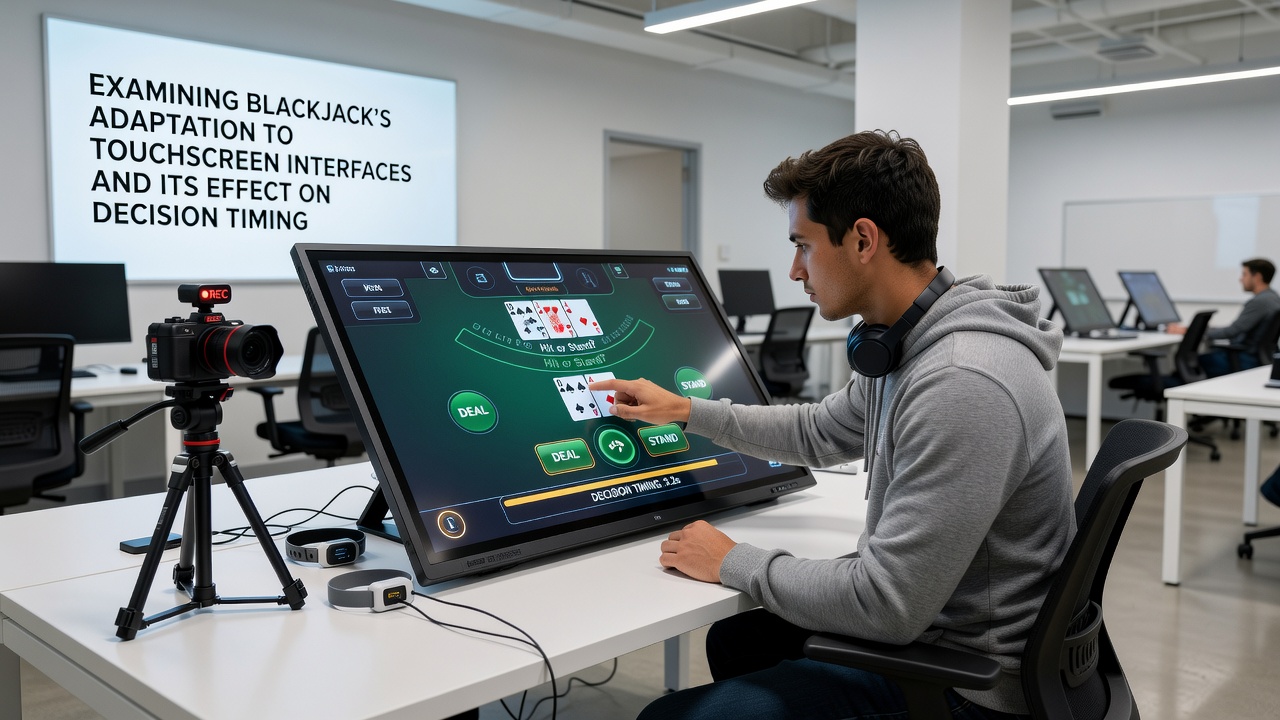
Physical blackjack tables rely on hand signals that dealers interpret instantly, whereas touchscreen versions replace those signals with designated screen areas that register taps or swipes. Research from the University of Nevada Las Vegas gaming technology program documented how players adapted their motor patterns to smaller active zones on smartphones compared with larger tablet surfaces, and the data showed measurable differences in response intervals depending on screen size and button layout.
Design teams adjusted hit and stand buttons to sit within thumb-reach zones on portrait-oriented devices, while landscape modes spread options across wider areas. Observers note that these layout choices reduced accidental taps on adjacent actions, yet they also introduced brief pauses when players verified finger placement before committing to a decision.
Gesture Mechanics and Response Intervals
Many applications now register a single tap for hit actions and a longer press or swipe for stand commands, and developers added visual confirmation animations that play immediately after each input. Studies compiled by the Canadian Institute for Gaming Research tracked average decision windows across thousands of sessions and found that swipe-based stand commands extended intervals by roughly 0.4 seconds on average when compared with simple taps, particularly among users new to the gesture set.
Platform updates released in July 2026 introduced predictive highlighting that illuminates the most statistically common action based on current hand totals, and early usage logs indicated this feature shortened deliberation periods for intermediate players while leaving expert timing largely unchanged. Hardware variations further influenced outcomes because some devices registered touches faster than others, creating small but consistent spreads in recorded decision speeds across different phone models.
Measured Impacts on Game Flow
Operators tracked round completion rates before and after interface refreshes, and the figures revealed that sessions on optimized touchscreen layouts processed 12 percent more hands per hour than earlier versions. Faster input registration combined with reduced mis-taps accounted for most of the gain, although players still encountered occasional delays when network latency interrupted the animation sequence that follows each decision.
Multi-hand formats common in digital blackjack amplified these timing effects because each additional hand required separate confirmation within a shared time window. Data sets collected by European gaming analytics firms showed that decision windows on the second and third hands lengthened by up to 1.2 seconds when players switched between portrait and landscape orientations mid-session, suggesting that screen rotation introduced extra cognitive load.
Player Adaptation Patterns Across Devices
Long-term users developed muscle memory that aligned finger movements with specific screen regions, and repeat testing indicated that experienced players maintained consistent timing even when switching between different device sizes. Newer participants required several sessions to reach similar speeds, and logs from training modes demonstrated that practice interfaces with adjustable button sizes helped shorten that learning curve.
Accessibility adjustments such as enlarged tap zones and haptic feedback further modified decision timing for users who activated those options. Reports from the Australian Interactive Gaming Association indicated that players employing haptic cues reduced average response intervals by 0.3 seconds compared with visual-only configurations, while enlarged zones produced mixed results depending on whether the increase crowded neighboring controls.
Conclusion
Touchscreen adaptations continue to influence how quickly blackjack decisions register in digital environments, and ongoing refinements to gesture recognition, button placement, and feedback mechanisms shape those intervals across player groups. Continued collection of session data will clarify how future hardware and software changes extend or compress the time between card presentation and player action.